IPTV itself is legal. Whether a specific IPTV service is legal depends on one thing: whether it has the rights to the channels it sells. A licensed service from a broadcaster or a streaming company is legal. A cheap subscription that sells thousands of premium channels, including live sports and pay-per-view, almost never is. This guide explains the difference, what the law says in plain terms, and how to start watching without risking your money, your data or your TV.
This article is general information, not legal advice. Laws differ by country, so check the rules where you live.
Key Takeaways
- IPTV means television delivered over an internet connection. The technology and the player apps are legal, the same as VLC or a web browser.
- The legal question is about the content and the seller: does the service hold the broadcasting rights? Cheap "all channels" offers usually do not.
- In the US, the 2020 Protecting Lawful Streaming Act targets commercial streaming operators, not individual viewers, but unauthorized streams are still copyright infringement.
- Europol describes illegal IPTV as a business for organized crime groups, and services can be shut down without warning.
Quick pick
- Safest: licensed live TV services and broadcasters' own apps.
- Free and legal: ad-supported streaming apps and publicly available free-to-air channel lists.
- Avoid: cheap "everything included" subscriptions with no named company.
What is IPTV, in plain words?
IPTV stands for Internet Protocol television: TV delivered as data over an IP network instead of through an antenna, cable or satellite signal. According to Wikipedia's IPTV article, it is usually sold and run by a telecom provider on a managed network, which is different from over-the-top (OTT) streaming that travels over the public internet.
In everyday use, people also say "IPTV" for something simpler: a player app that plays a list of channels (an M3U playlist or an Xtream Codes login) supplied by a service. The app only plays what you give it. For a longer explanation of how it works, see our guide on what IPTV is and how it works, and for the technical side see IPTV formats and codecs.
Is IPTV legal?
There are three separate parts, and each has a different answer:
| Part | Is it legal? | Why |
|---|---|---|
| The technology (IPTV) | Yes | Delivering TV over IP is used by telecoms, broadcasters and streaming companies worldwide. |
| The player app | Yes | A player is a media player. It does not decide what you load into it. |
| The channels you watch | Depends | Legal if the provider has the rights or the stream is published openly. Illegal if it is unlicensed. |
So "is IPTV legal?" is the wrong question. The useful question is: does the service I am paying for have the rights to what it sells?
What the law says in the United States
The Protecting Lawful Streaming Act of 2020, part of the Consolidated Appropriations Act, 2021, made large-scale commercial streaming of copyrighted works without authorization a felony, with up to ten years in prison for repeat offenses. It targets commercial services that mainly stream copyrighted material, and its sponsor said it does not reach people who use these sites or unknowingly stream unauthorized copies, according to Wikipedia's summary of the Act. That does not make unauthorized streams legal: copyright infringement is still unlawful, and the law is aimed at the sellers.
What about other countries?
Rules differ widely. Some countries treat viewing unlicensed streams as infringement, others focus on the sellers. Before you pay for a service, check the rules and the provider's licensing where you live.
What is legal to watch
- Licensed live TV services: companies that hold broadcasting rights and sell subscriptions, such as YouTube TV, Sling TV, Hulu + Live TV or fuboTV in the US.
- Broadcasters' own apps and free streams: public and commercial broadcasters often publish live streams on their own sites and apps.
- Free ad-supported streaming: services such as Pluto TV and Tubi.
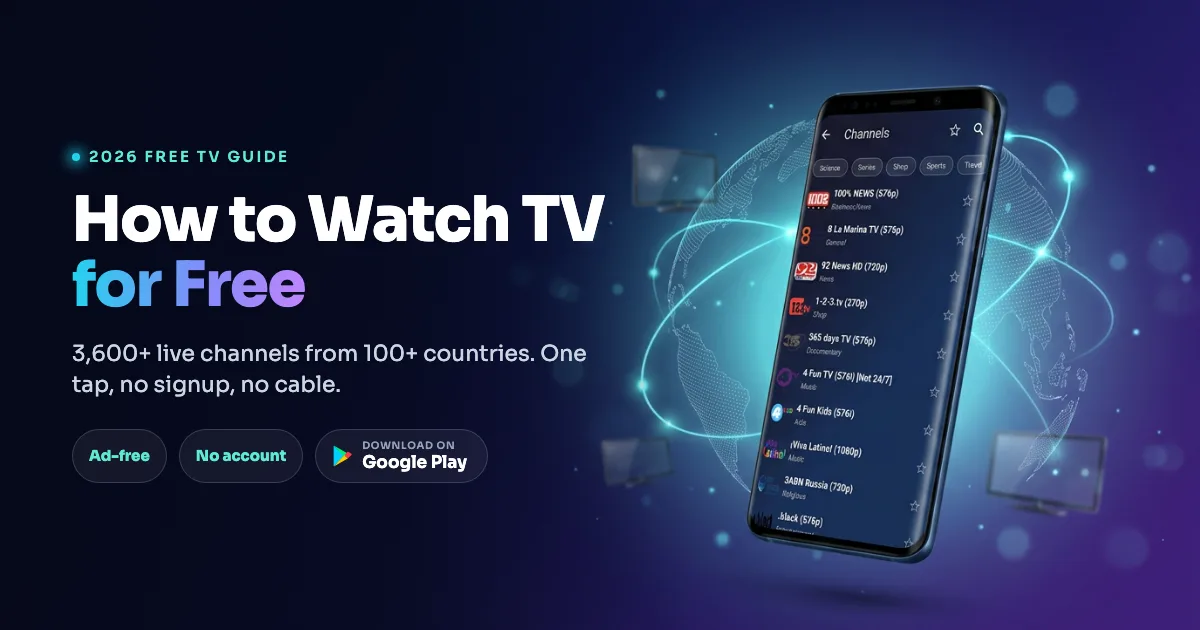
- Publicly available free-to-air channel lists: channels that broadcasters publish openly. The Open World TV list built into IPTV Player & Live TV is of this kind. For how it works, read how to watch TV for free in 2026.
- Your own licensed playlist: a playlist from a provider that holds the rights in your country, loaded into any player.
Why illegal IPTV is a bad idea, even if it works today
Illegal services are cheap because they do not pay for rights. That brings real risks for you as a customer:
- The service can vanish. Illegal services are regularly shut down. Europol's Operation KRATOS 2, which ran from September 2025 to April 2026, ended with 29 arrests and 86 suspects identified, according to Bitdefender's report on the operation. Europol described illegal IPTV as "a lucrative business for organized crime groups".
- Your money and payment details are exposed. You are paying an anonymous seller, often by card, crypto or gift card, with no recourse if the service disappears.
- Your device is at risk. Sellers push modified apps and APK files outside official stores. Install players only from Google Play or another official store.
- The quality is unreliable. Overloaded servers cause constant buffering, especially at big sports events. See how to fix IPTV buffering if you already have this problem.
Legal IPTV services vs unauthorized IPTV services
Legal IPTV services and unauthorized IPTV providers look similar in an app, because both give you a channel list. The difference is behind it:
| Question | Legal IPTV services | Unauthorized IPTV services |
|---|---|---|
| Licensing | Hold licensed rights for the channels they carry | Redistribute copyrighted content without rights |
| Who sells it | A named company with terms and support | Anonymous resellers, often changing names |
| Price | Matches what the content costs | Far below the cost of premium channels |
| Payments | Cards and normal payment providers | Crypto, gift cards, private transfers |
| Stability | Stable service and a track record | Can be shut down or disappear |
How to check whether an IPTV service is legitimate
- Is there a real company behind it? A legitimate seller has a named business, an address, terms of service and a support contact.
- Does the price make sense? Thousands of premium channels, live sports and pay-per-view for a few dollars a month is not possible with licensed rights.
- How can you pay? Only crypto, gift cards or bank transfers to private accounts is a red flag.
- Does it match what rights holders offer? If a sports league or broadcaster only sells its channels through certain companies, a different reseller selling them cheaply is not licensed.
- Where is the app from? A "free APK" from a random website is a warning sign. Use official stores.
- What happens when something breaks? A legitimate service has working support, refunds and a track record.
How to start watching safely
- Choose your content: a licensed service, a free ad-supported app, or a free-to-air list.
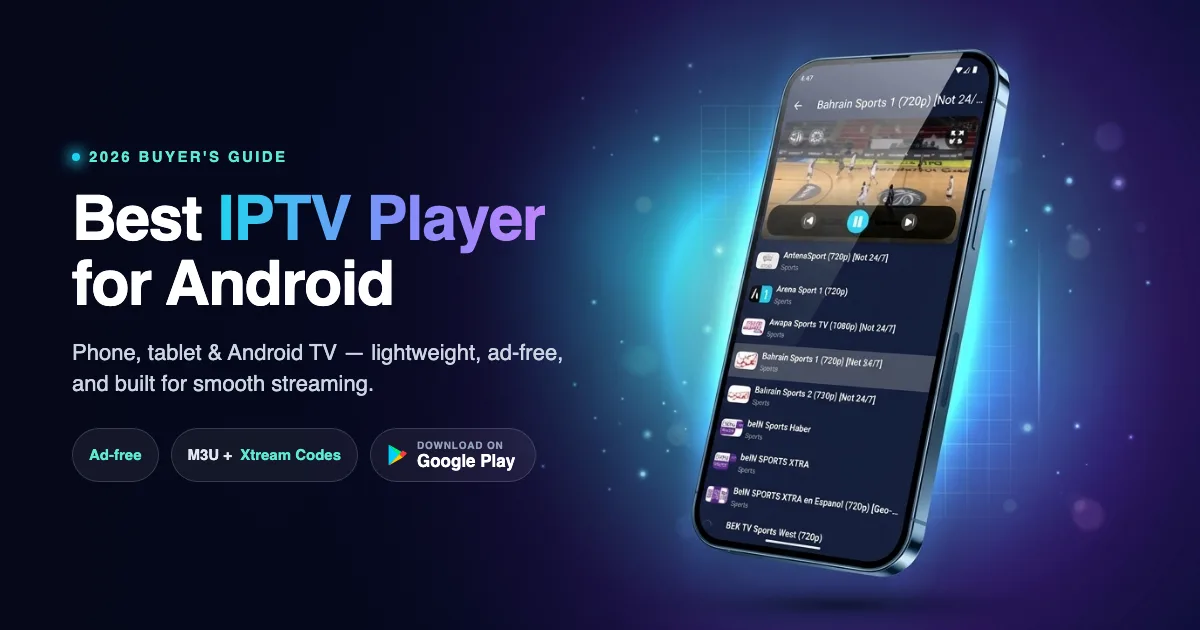
- Pick a player from the official store: if you want one app for all your lists, IPTV Player & Live TV is free, ad-free and works on Android phones, tablets and Android TV.
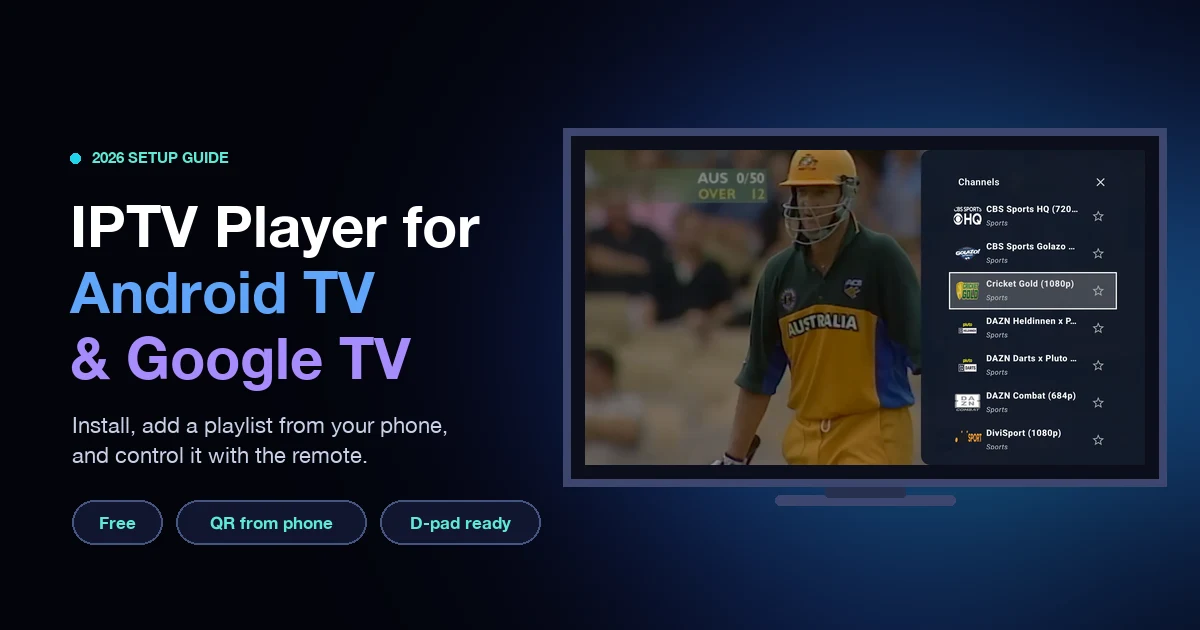
- Add your playlist: paste an M3U link, enter an Xtream login, or pick a file. On a TV, scan the QR code and send it from your phone. See the Android TV setup guide.
- Tune playback: change the buffering mode or stream format if a channel stutters.
Not sure which player fits you? Compare the options in our guide to the best IPTV players for Android. You can install IPTV Player & Live TV from Google Play and start with the free channels.
Frequently asked questions
Is IPTV legal?
Yes. IPTV is a way to deliver TV over the internet, and it is used by telecoms, broadcasters and streaming companies. A specific service is legal only if it holds the rights to the channels it sells.
Is IPTV illegal in the US?
No, IPTV technology is not illegal in the US. Unlicensed services are. The Protecting Lawful Streaming Act of 2020 made large-scale commercial unauthorized streaming a felony, and it is aimed at operators rather than viewers.
Can you get in trouble for using IPTV?
That depends on your country and on the service. Operators of unlicensed services face the heaviest penalties. Viewers can still face copyright issues in some places, and the service can disappear without warning. This is not legal advice, so check your local rules.
Are IPTV apps legal?
Yes. A player app only plays the streams you give it, like a media player. The content you load decides whether you are using it legally.
Is a cheap IPTV subscription legal?
Almost never. Licensed rights are expensive, so a very low price for thousands of premium channels is a sign the service does not have them.
How do I know if an IPTV service is legit?
Look for a named company with terms and support, a realistic price, normal payment methods and apps from official stores. If the seller is anonymous and the offer sounds too good, it probably is.
Is free IPTV legal?
It can be, if the streams are published by the broadcasters themselves or by licensed free services. Lists of publicly available free-to-air channels, such as Open World TV in IPTV Player & Live TV, are of this kind. Free "premium channels" are not.
Sources
- Wikipedia, "Internet Protocol television," retrieved 2026-10-11, https://en.wikipedia.org/wiki/Internet_Protocol_television
- Wikipedia, "Protecting Lawful Streaming Act," retrieved 2026-10-11, https://en.wikipedia.org/wiki/Protecting_Lawful_Streaming_Act
- Bitdefender HotForSecurity, "Europol cracks down on illegal streaming globally" (Operation KRATOS 2), June 5, 2026, retrieved 2026-10-11, https://www.bitdefender.com/en-us/blog/hotforsecurity/europol-global-illegal-streaming
- The Level Up, analysis of the Open World TV playlist (publicly available free-to-air channels), October 2026